
Court marriage is a legally recognized union between two individuals conducted in accordance with the law, rather than traditional or religious customs. It offers a straightforward, secular process for couples who wish to formalize their relationship without the involvement of cultural or religious rituals. This form of marriage is gaining popularity worldwide due to its simplicity, legal clarity, and inclusivity.
What is Court Marriage?
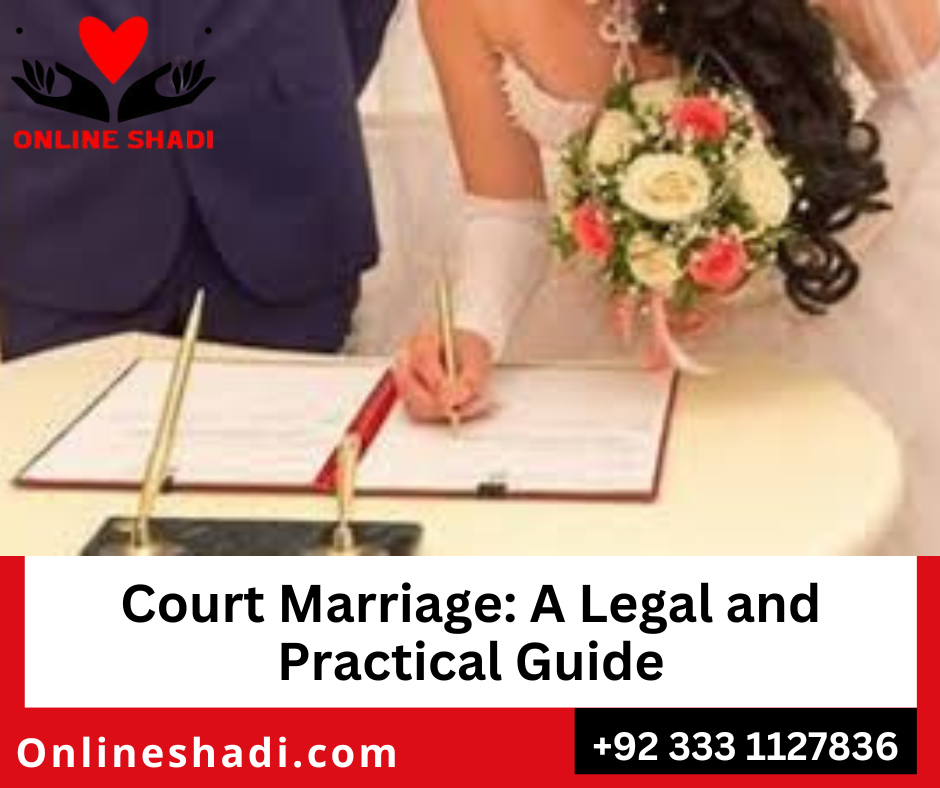
Court marriage is solemnized in the presence of a magistrate or a civil judge, typically at a family or civil court. The process is governed by legal statutes, and both parties must consent freely without any pressure or coercion. It ensures equal rights for both partners under the law and provides legal protection for their union.
Who Can Apply for Court Marriage?
To be eligible for court marriage, the following conditions must generally be met:
Both individuals must be of legal marriageable age (usually 18 for women and 21 for men in many countries, but this can vary).
Both parties must consent to the marriage willingly.
Neither individual should have a living spouse at the time of marriage.
The couple must be mentally sound and capable of understanding the nature of marriage.
Steps Involved in Court Marriage
While the exact procedure may vary by country or jurisdiction, the general steps include:
1. Notice of Intended Marriage
The couple submits a written application or notice to the marriage registrar of their area, informing of their intention to marry.
2. Verification and Objection Period
The notice is displayed publicly for a specified period (commonly 30 days) to allow for any legal objections.
3. Document Submission
Both individuals must provide identity proofs, passport-sized photographs, affidavits declaring marital status, and proof of age and residence.
4. Marriage Ceremony
After the waiting period and verification, the marriage is solemnized in the presence of the registrar and three witnesses.
5. Marriage Certificate
Once the procedure is complete, a marriage certificate is issued. This document is legal proof of the union and is essential for various official purposes.
Advantages of Court Marriage
Legal Recognition: Provides official recognition of the marriage, protecting rights related to inheritance, property, and divorce.
Simplicity: Avoids complex rituals and ceremonies, making it cost-effective and less time-consuming.
Interfaith and Inter-caste Unions: Offers a neutral ground for couples from different religions or castes.
Women’s Rights: Ensures legal protection and equality for women in the marriage.
Challenges and Considerations
While court marriage is a valid and legal option, it may come with some social or familial challenges, particularly in conservative societies. Couples should be prepared for possible objections and ensure all legal formalities are strictly followed to avoid future complications.
Conclusion
Court marriage is a modern, practical option for couples who want a legal, straightforward union. It emphasizes mutual consent, equality, and legality, making it an appealing choice in today’s diverse and progressive society. Whether as a preference or necessity, court marriage upholds the core values of partnership and human rights, offering a safe and lawful path to a shared life.
