
In the digital age, technology continues to reshape every aspect of human life—including the sacred institution of marriage. One significant development in this regard is the emergence of online nikah, a virtual method of solemnizing Islamic marriages that is gaining popularity among Muslims around the world.
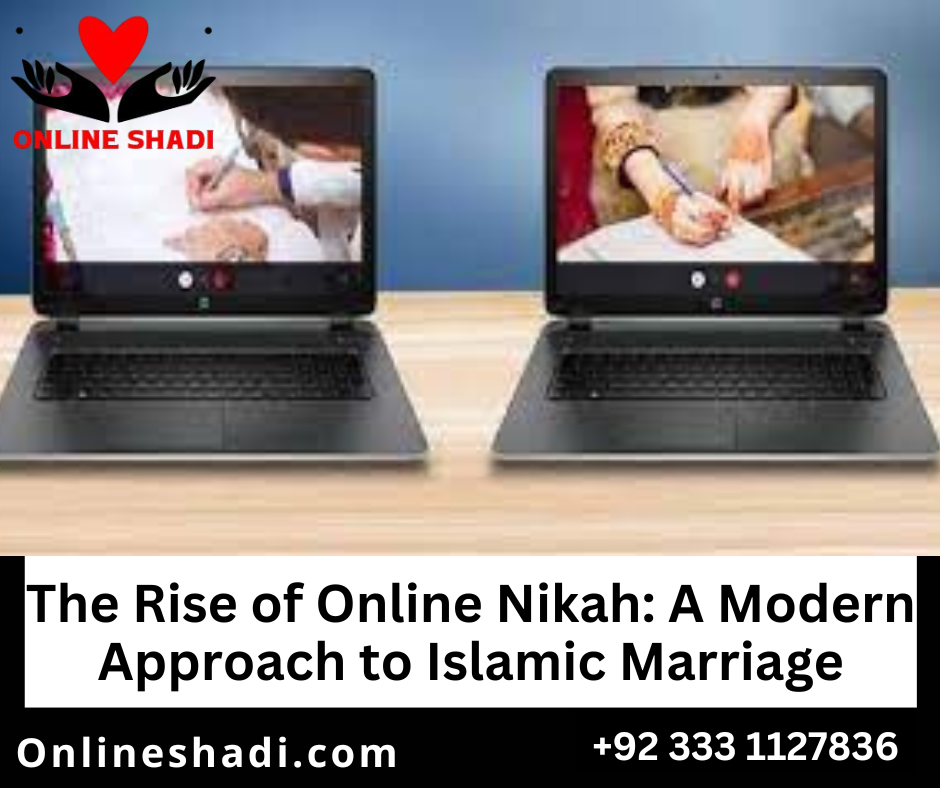
What Is Online Nikah?
Online nikah refers to the process of performing a nikah (Islamic marriage contract) using digital platforms like video conferencing tools (e.g., Zoom, Skype, WhatsApp) while still adhering to Islamic legal requirements. It is not a different type of marriage, but rather a modern way of conducting the traditional Islamic marriage ceremony when physical presence is not possible.
Islamic Validity of Online Nikah
According to most Islamic scholars, a nikah is valid if it fulfills the following conditions:
1. Consent of both the bride and the groom.
2. Presence of two male Muslim witnesses (or one male and two female witnesses).
3. A wali (guardian) for the bride, especially in Hanafi, Shafi’i, and Hanbali schools of thought.
4. A clearly stated mahr (dowry).
5. Offer and acceptance (ijab and qubul) conducted in the same session.
These conditions can be fulfilled through online communication, provided that identity and consent can be clearly verified, and the witnesses are present virtually in real-time.
Many reputable Islamic scholars and muftis, particularly in South Asia and the Middle East, have supported the permissibility of online nikah under specific conditions. Some Islamic countries, like Saudi Arabia and Pakistan, have even developed official online portals for remote marriage registration.
Legal Recognition
While online nikah may be Islamically valid, its civil recognition depends on the laws of the country where the marriage is registered. In some countries, such as Pakistan, online nikahs are legally recognized if they are registered with the relevant authorities. In others, like the United States or the UK, the legality can vary by state or local jurisdiction.
Therefore, couples considering an online nikah should ensure:
The process complies with local civil marriage laws.
They consult a licensed marriage registrar or legal expert.
They obtain a marriage certificate or nikah nama for documentation.

Reasons for Choosing Online Nikah
Several factors have contributed to the growing popularity of online nikah:
Globalization: Cross-border relationships often face travel and visa restrictions.
COVID-19 Pandemic: Social distancing and lockdowns forced people to seek virtual alternatives.
Convenience: Families and participants can attend the ceremony without logistical challenges.
Privacy and Simplicity: Online nikahs are often more intimate and less costly than traditional weddings.
The Role of Nikah Services
To ensure a smooth and sharia-compliant online nikah, many organizations now offer online nikah services, which may include:
Arranging qualified nikah officiants.
Providing video conferencing setup and witness coordination.
Drafting and registering marriage certificates.
Offering legal consultation for local and international recognition.
These services are especially valuable for people living in the diaspora or those seeking quick, private, or long-distance marriage solutions.
Conclusion
Online nikah is a practical and religiously permissible solution that reflects the adaptability of Islamic law in the modern era. While maintaining the sanctity of marriage, it bridges geographical distances and accommodates the needs of contemporary Muslims. However, it remains crucial for couples to understand both the Islamic requirements and local legal implications before proceeding.
As with any marriage, sincerity, clarity, and mutual respect remain the foundation—whether the vows are exchanged in person or across a digital screen.
